Loading experience
0%

Azarel Robotics Engineering

Scroll
Trained by every robot Built for any robot Trained by every robot Built for any robot
Introducing

Sea trials, before the sea.

Product

Leviathan

Leviathan is a development tool for marine robotics — simulate the vehicle, the sensors and the sea, train the autonomy, and grade it before it ever gets wet. From survey and inspection to hull cleaning.
Read the documentation

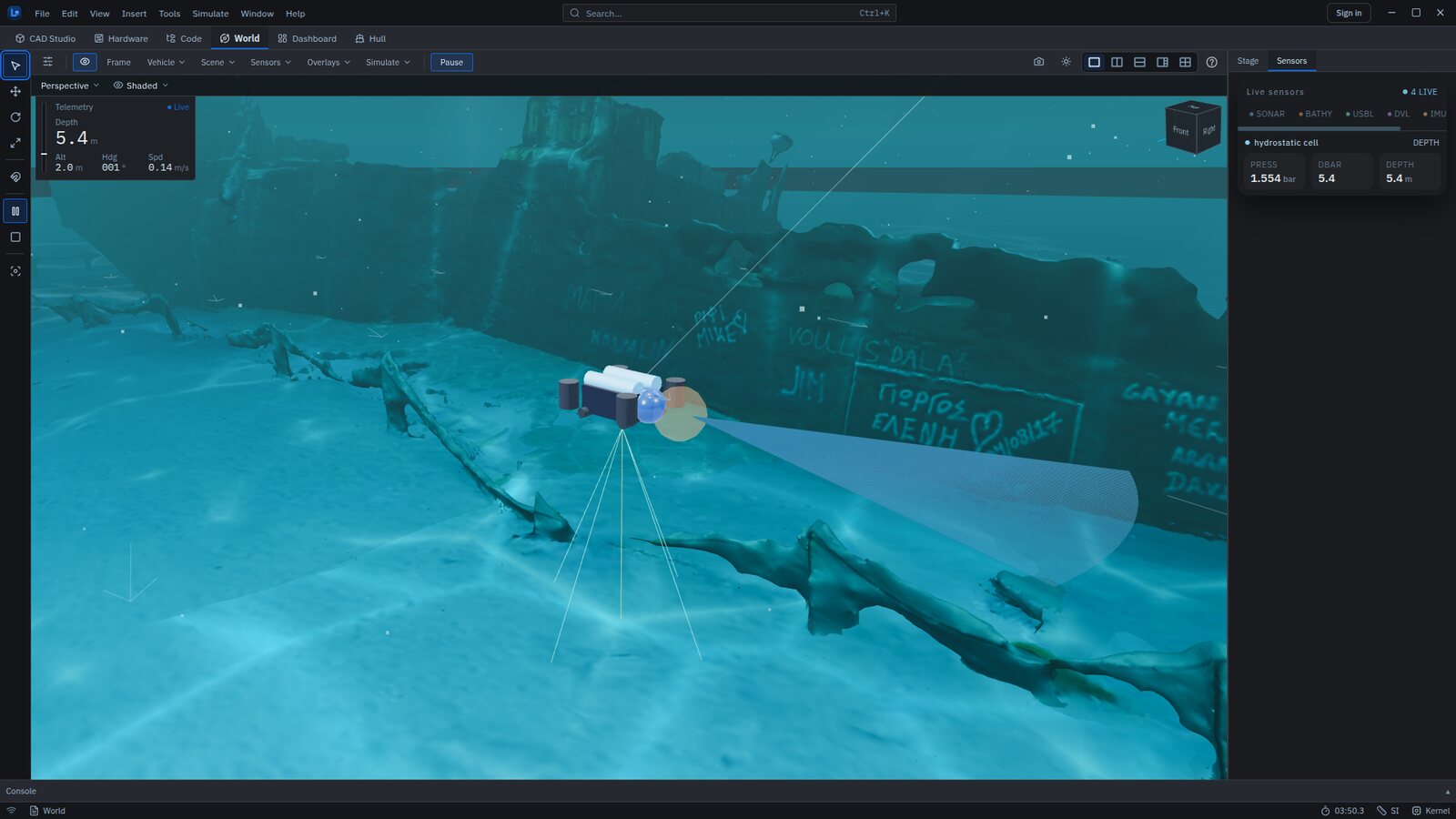
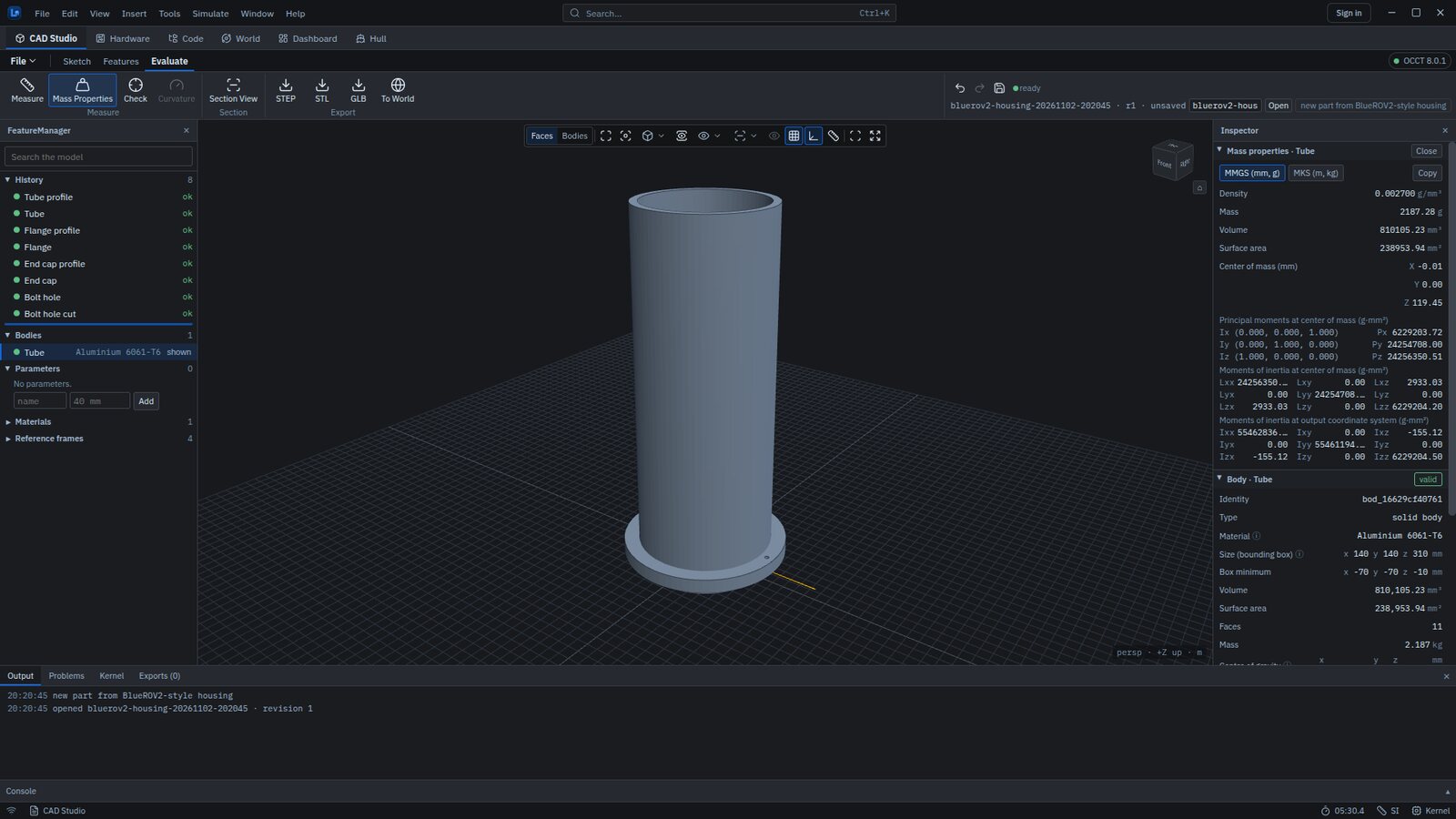
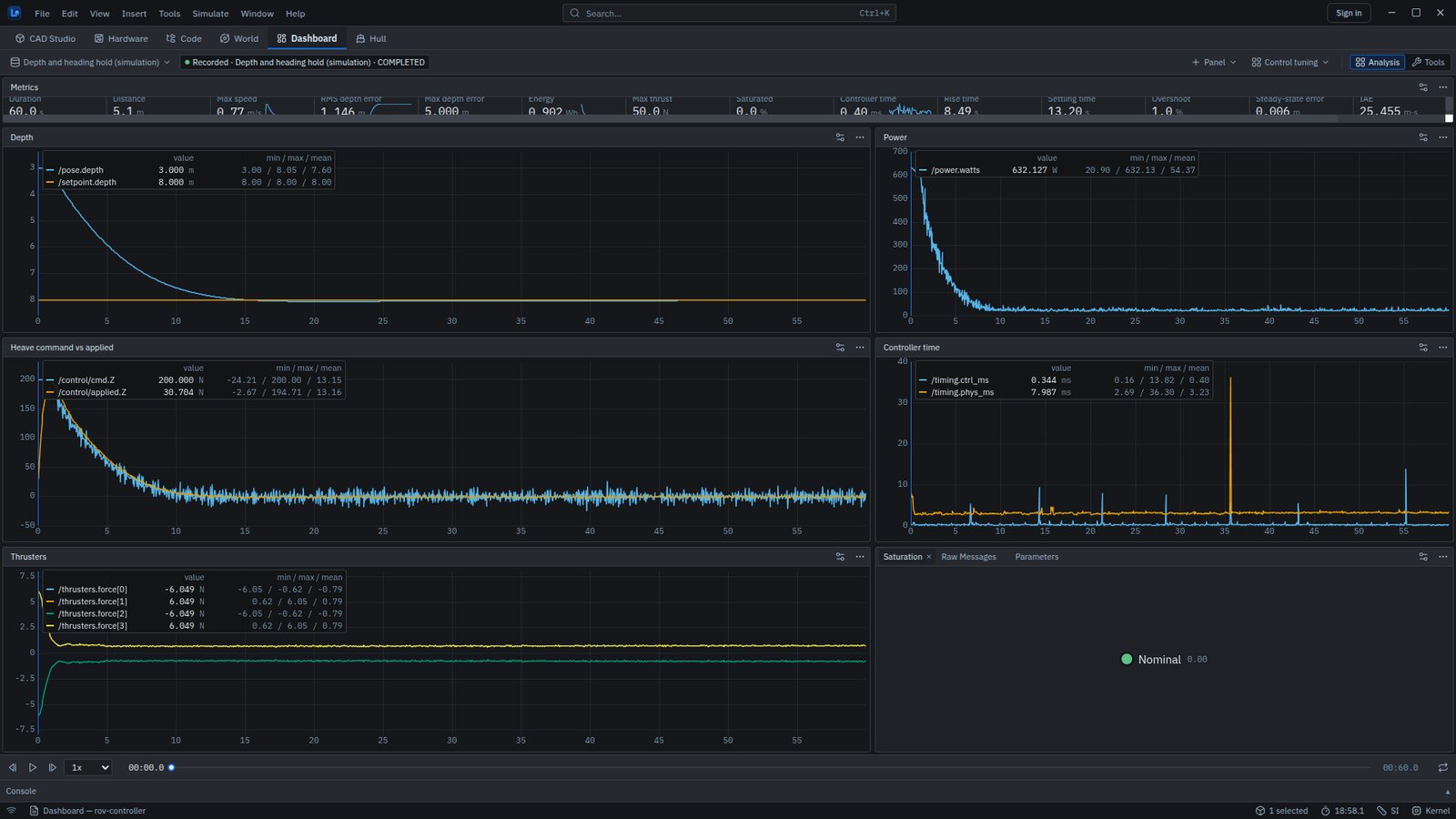
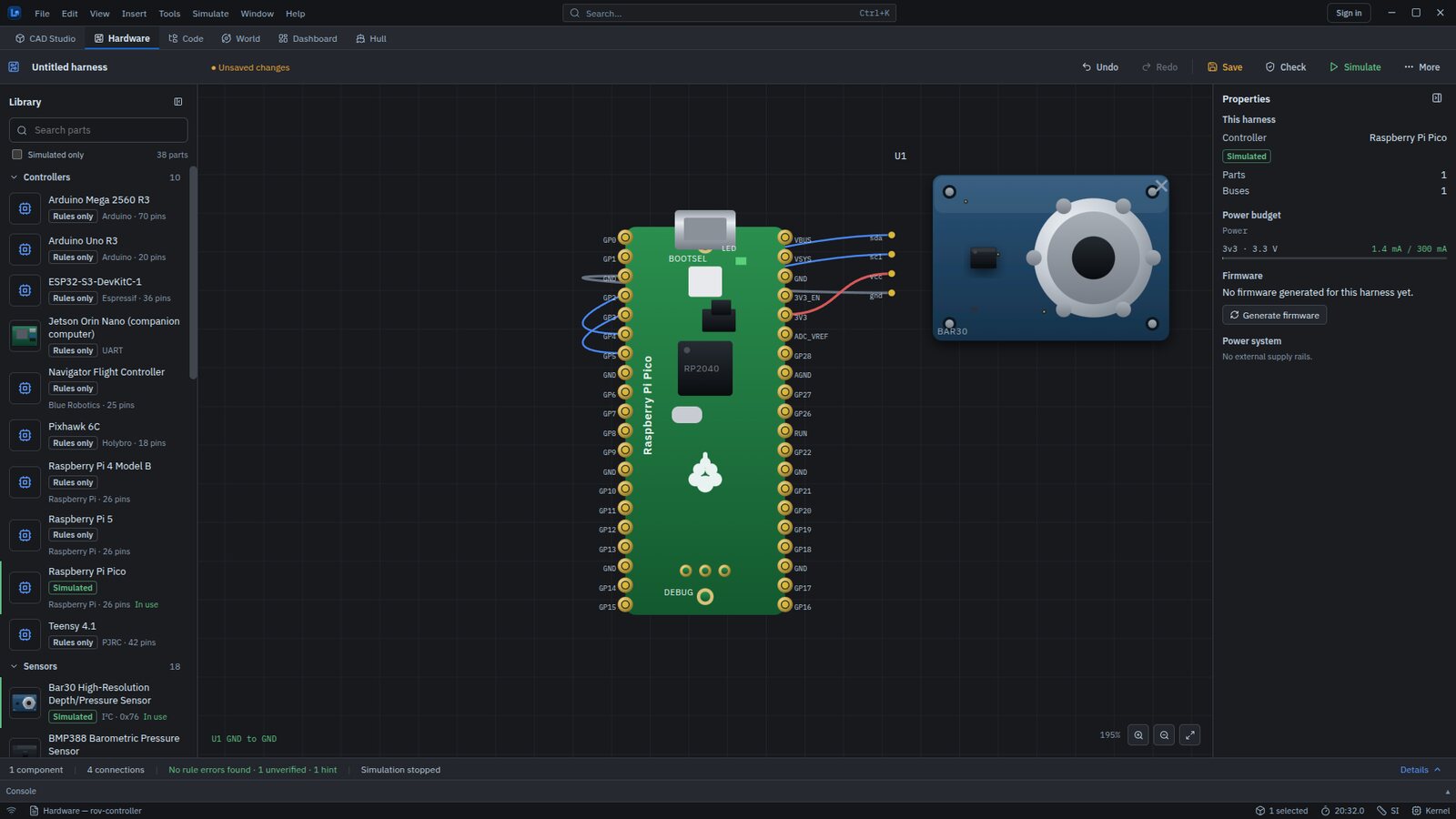
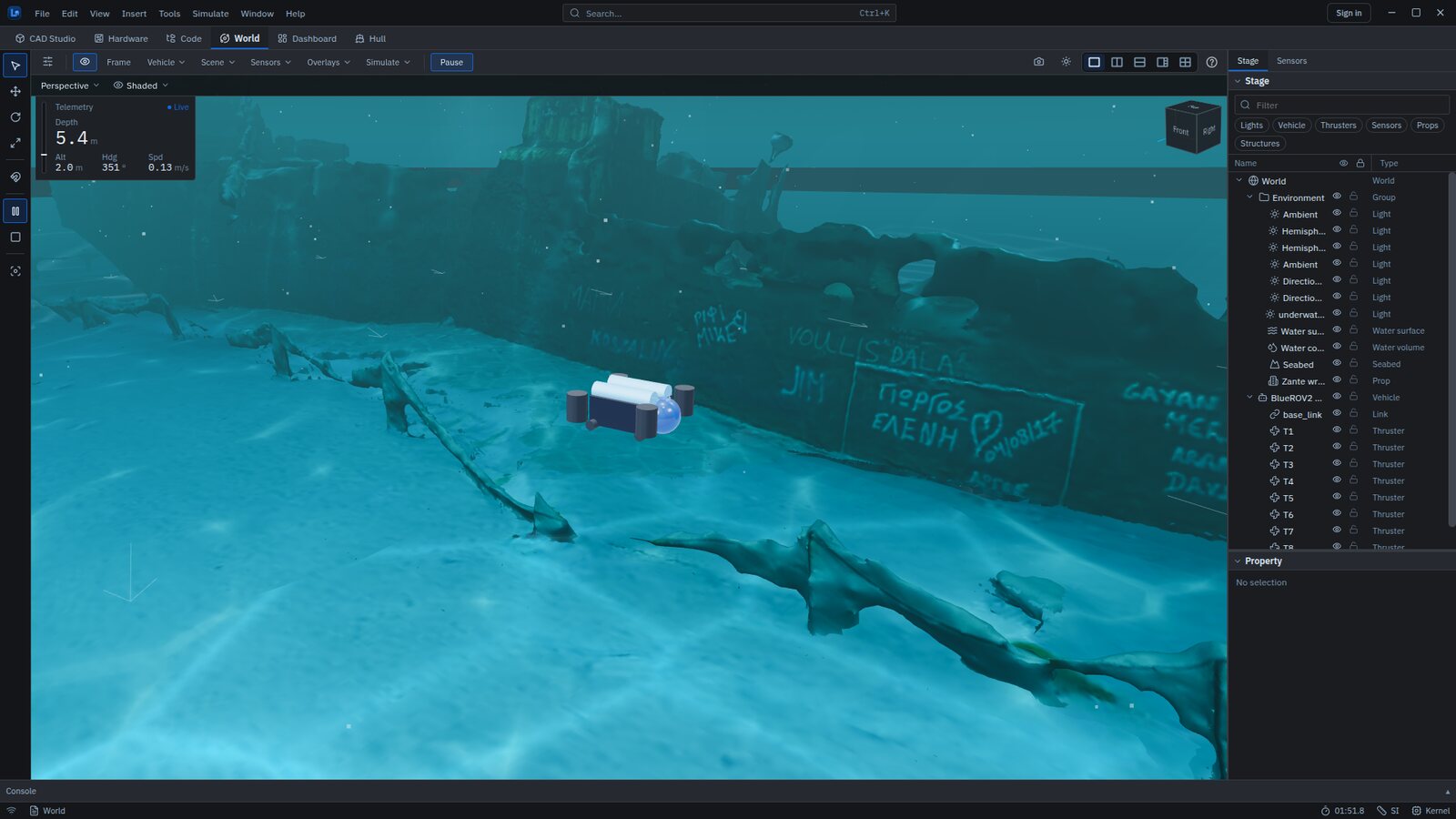
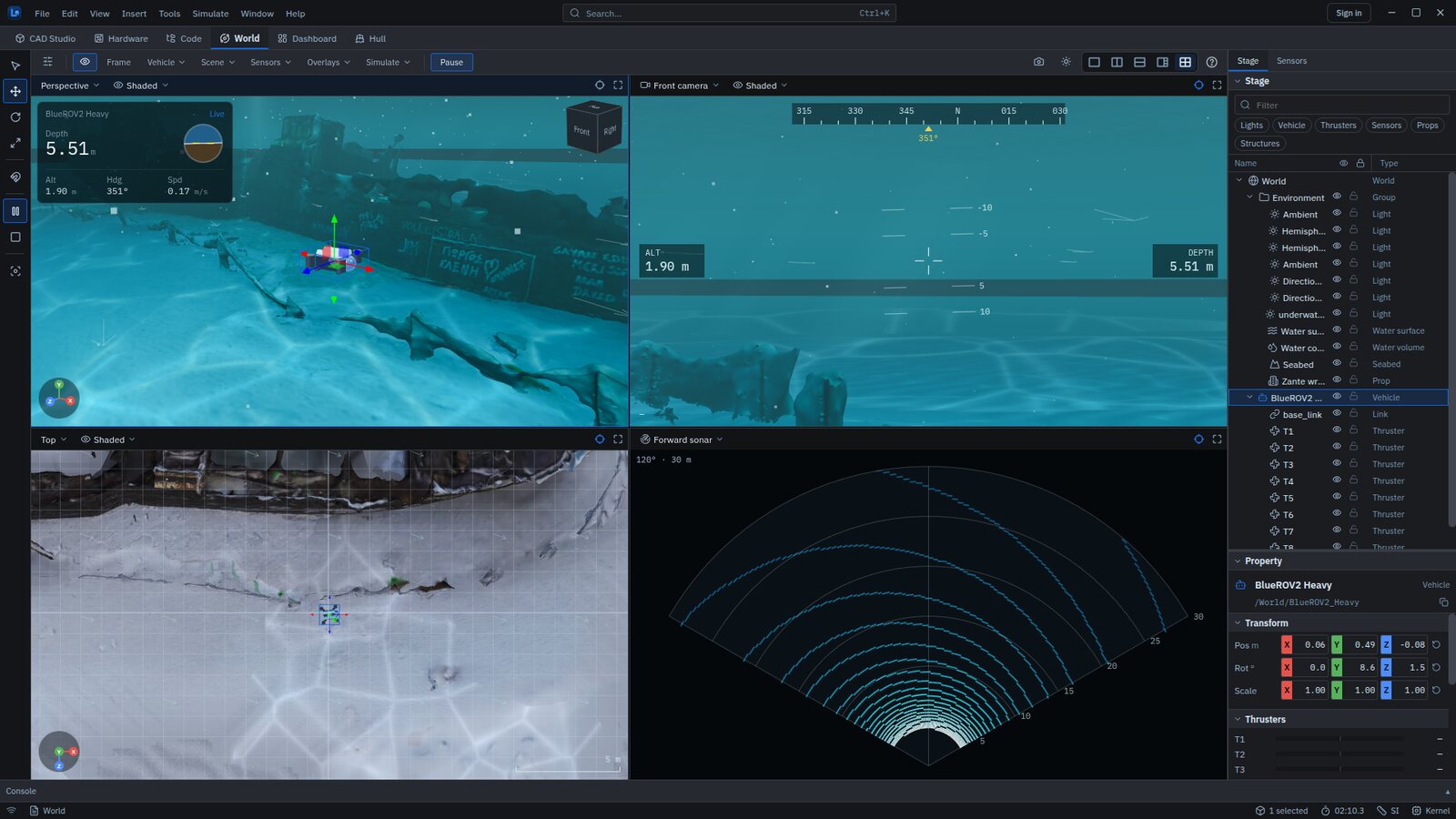
Leviathan 0.8 — BlueROV2 Heavy beside the wreck in the Shipwreck scene, World workspace. Leviathan 0.8 — Four views of one dive: perspective, front camera, top and forward sonar. Leviathan 0.8 — DVL beams, sonar fan and USBL path with live readings in the Sensors tab. Leviathan 0.8 — CAD Studio, a BlueROV2-style housing in aluminium with its mass properties. Leviathan 0.8 — Dashboard Control tuning layout on a recorded depth-hold controller simulation. Leviathan 0.8 — Hardware workbench, a Bar30 depth sensor wired to a Raspberry Pi Pico.
Leviathan  World scene  Shipwreck
Film  Leviathan in three minutesReal app capture  2:56

Every run starts at the surface.

Nine environments · all of them below

Environments

Nine environments

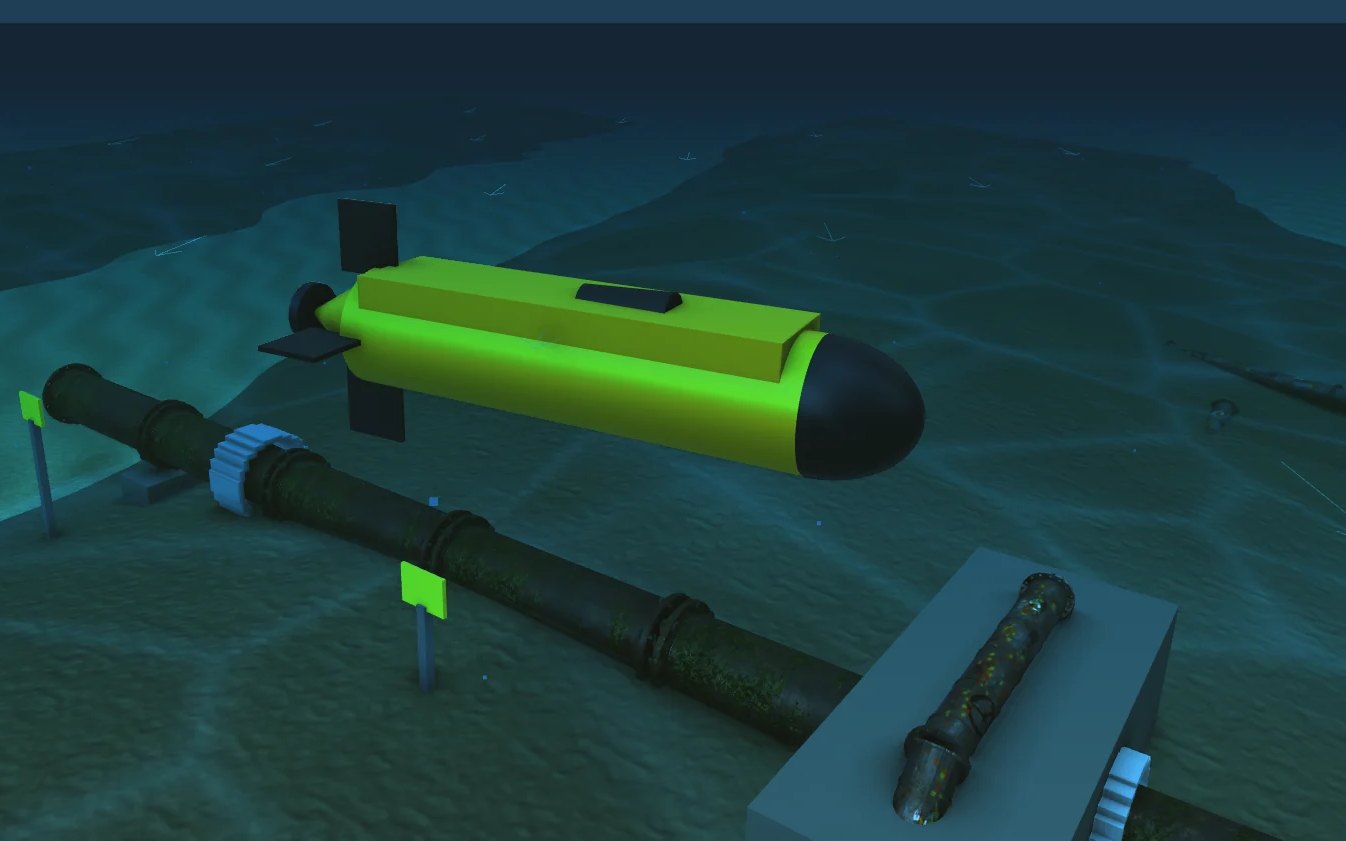
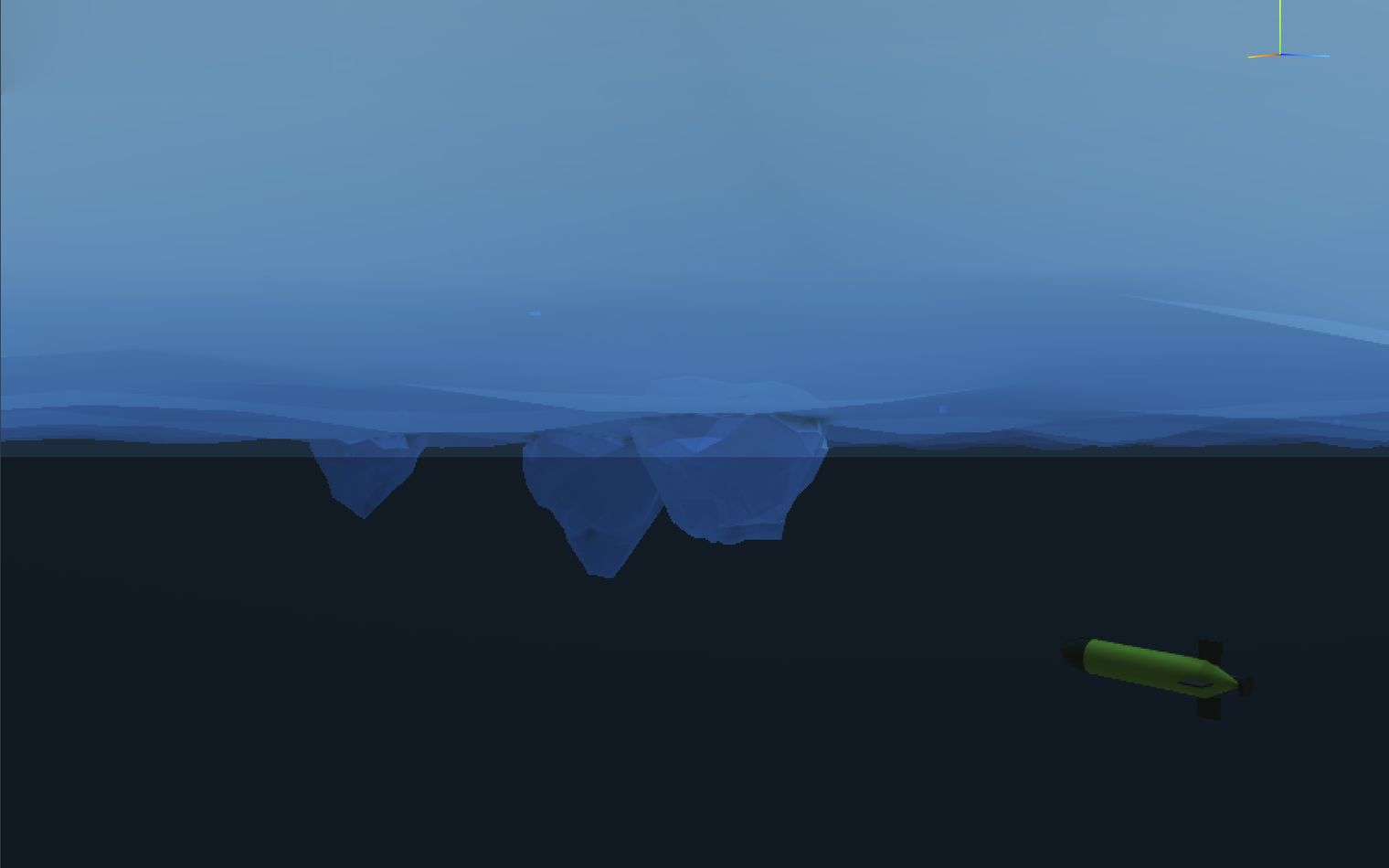
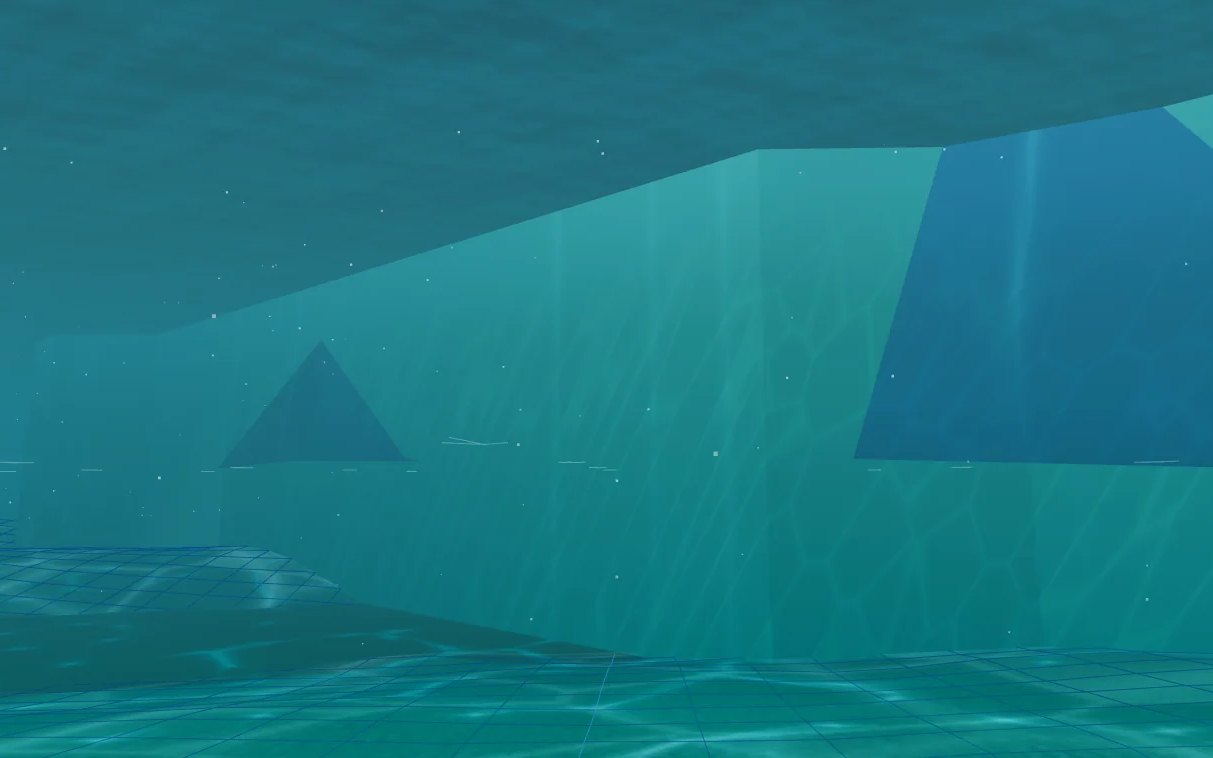
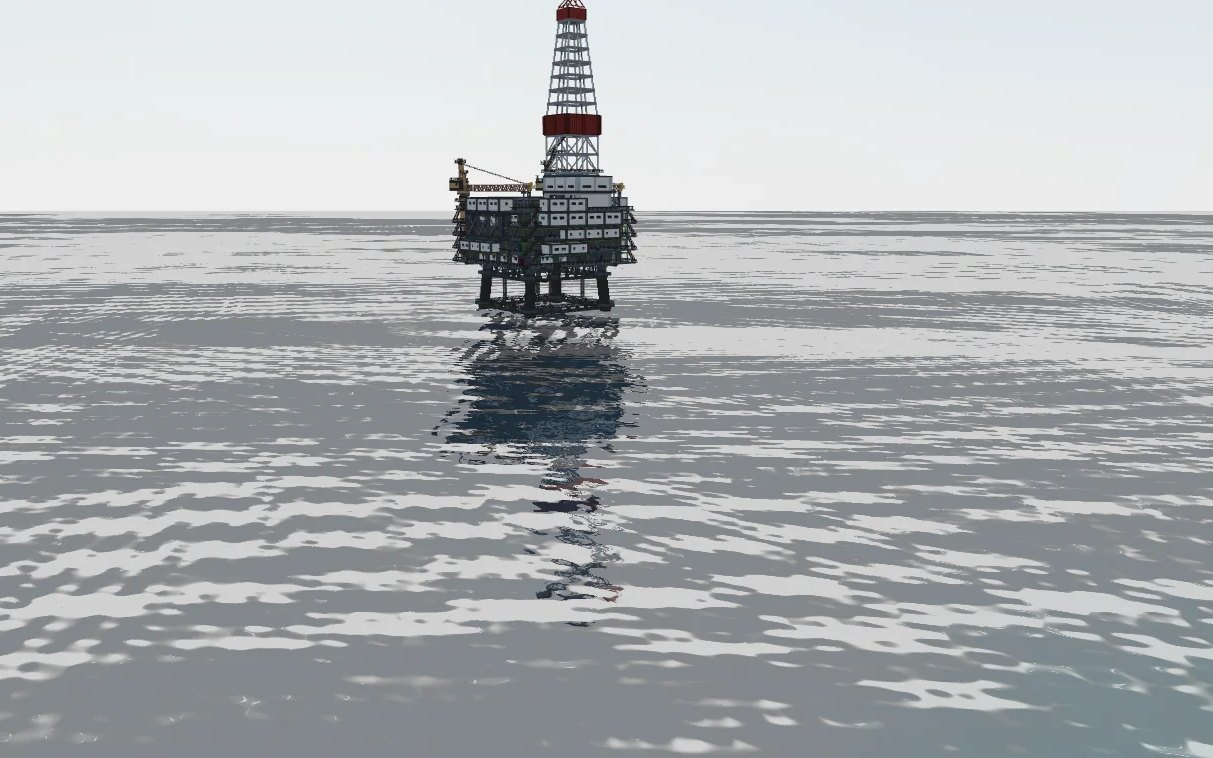
From a coral reef to the underside of an ice floe, each one ships with Leviathan and sets its own seabed, water, current and sound speed. Every frame below is a capture from the cockpit viewport.
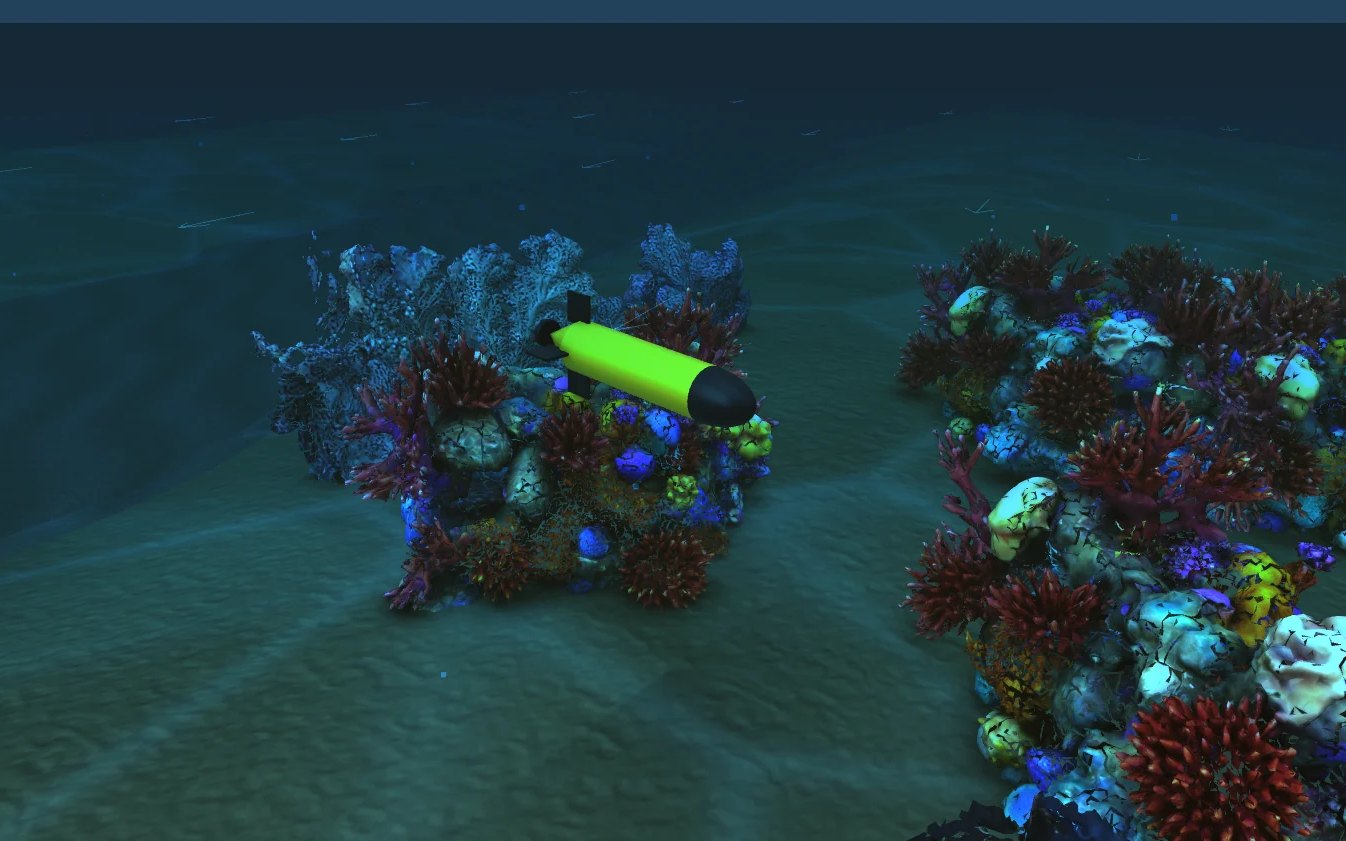
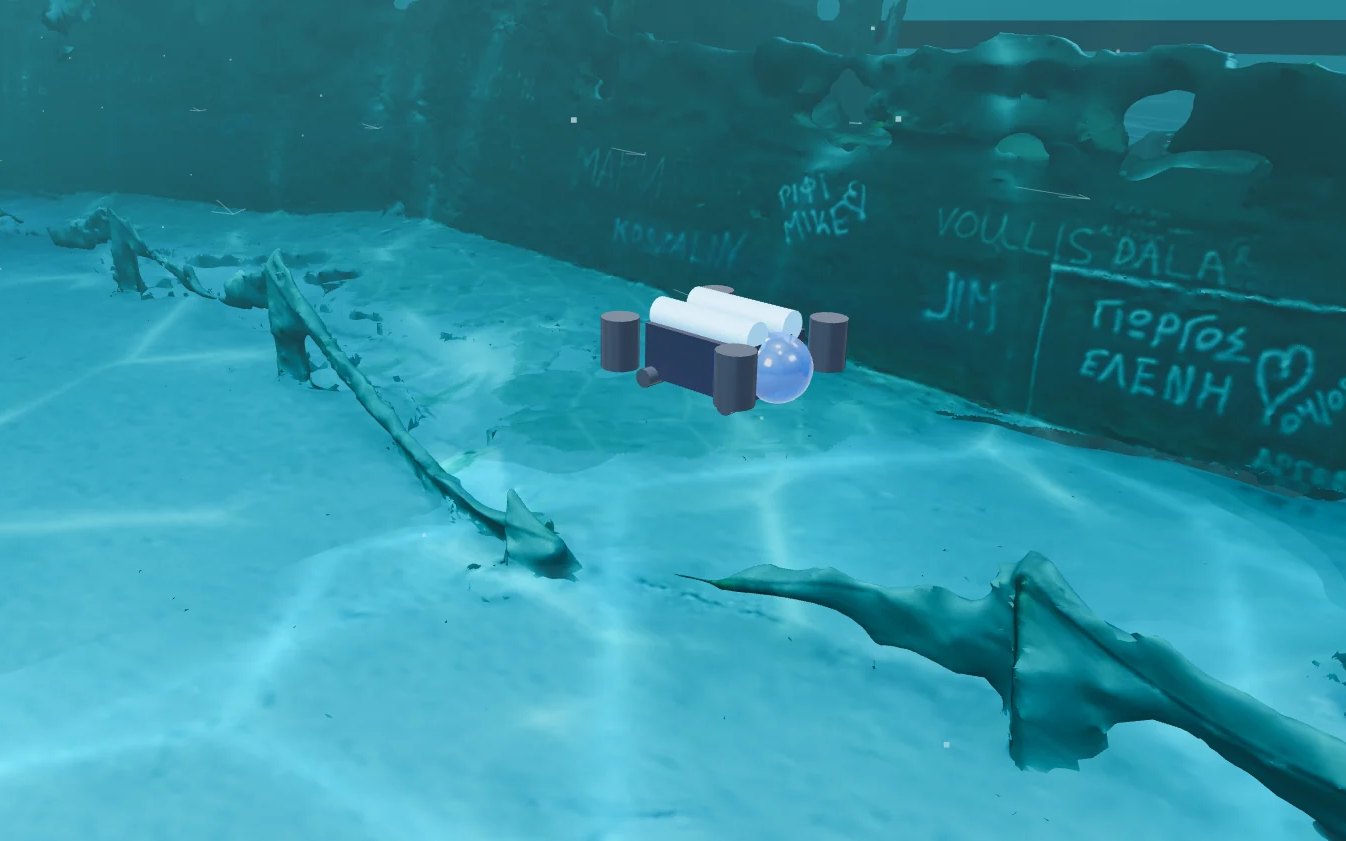
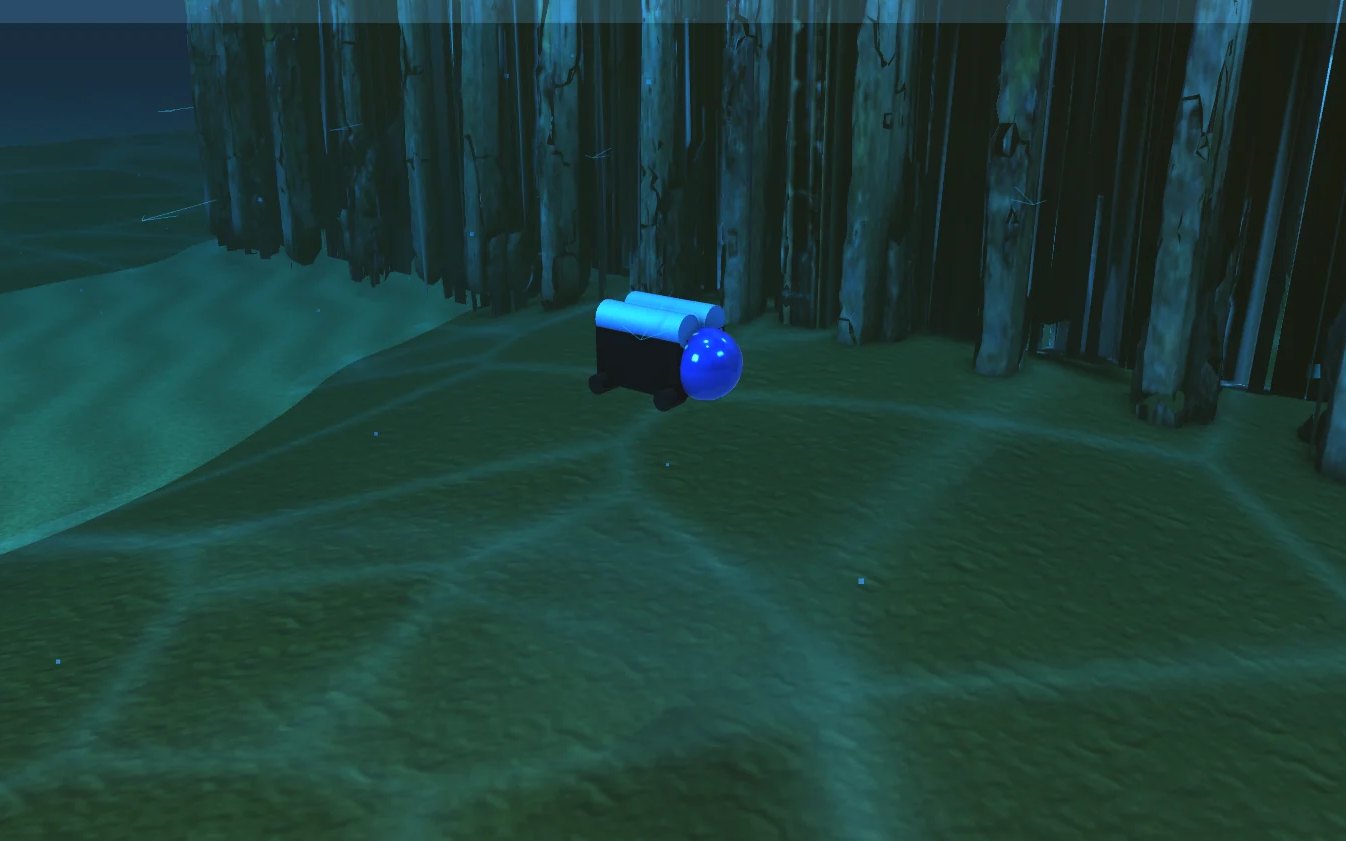
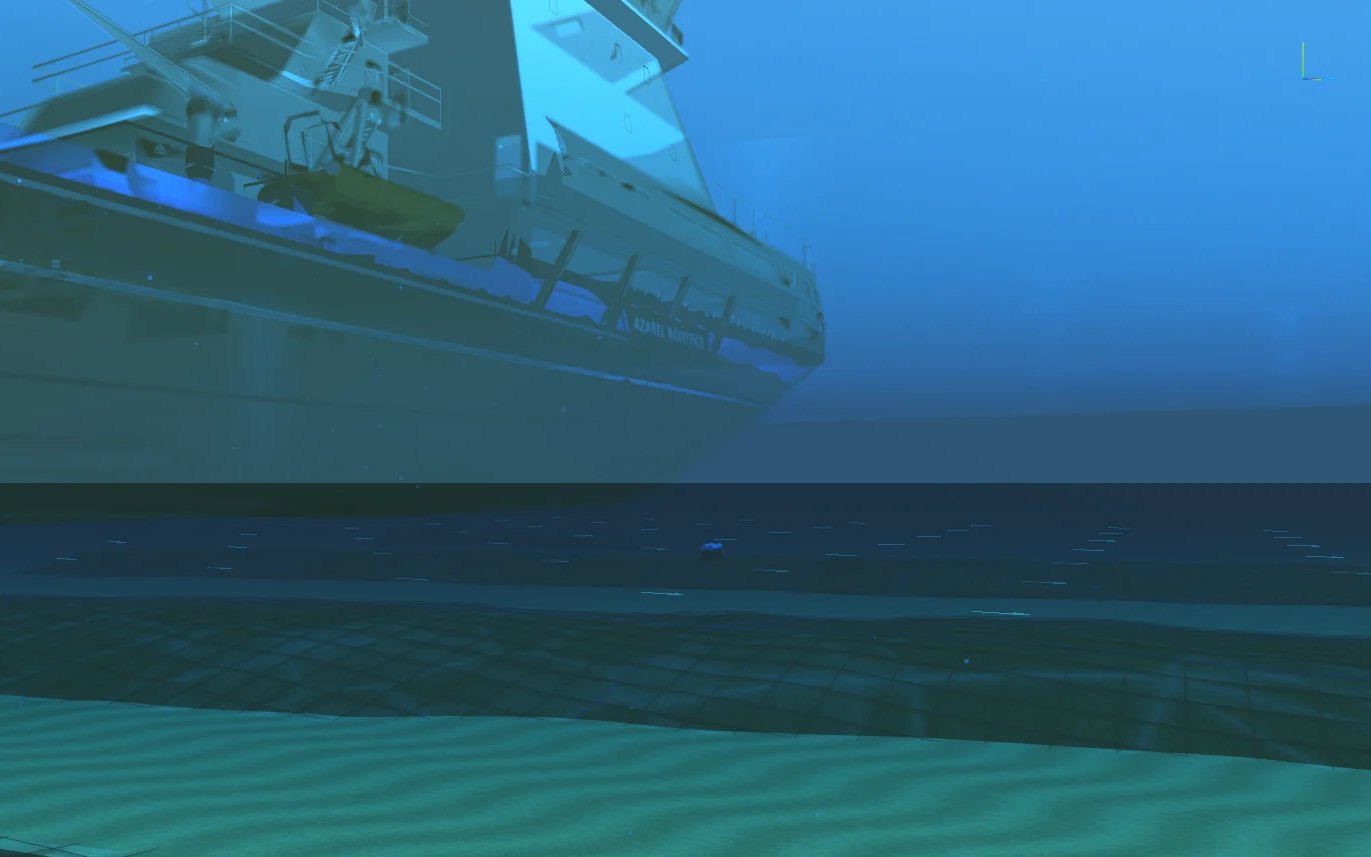
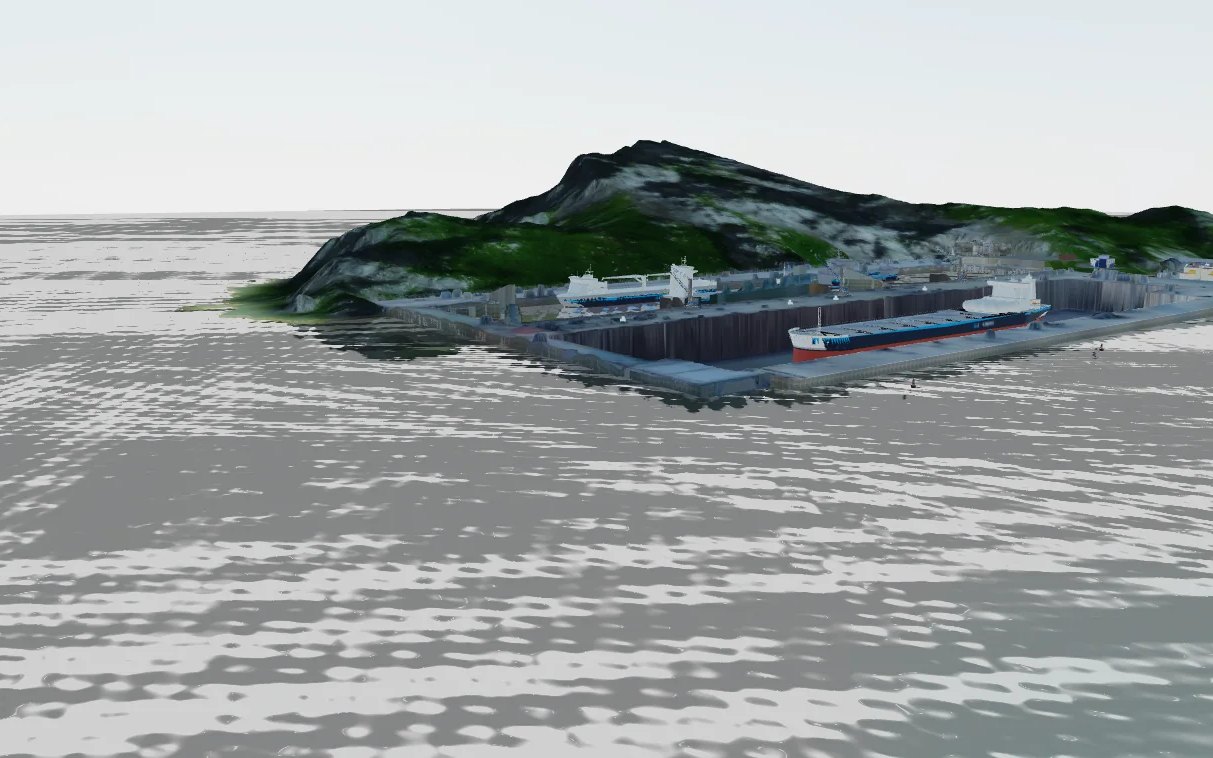
Leviathan cockpit view, coral reef environment: a REMUS-100-class AUV between coral heads on a shallow reef. Leviathan cockpit view, shipwreck environment: a BlueROV2 Heavy alongside the wreck on a sandy shelf. Leviathan cockpit view, pipeline environment: a HUGIN-class AUV following a subsea flowline past a valve and markers. Leviathan cockpit view, under ice environment: an AUV below a thin ice canopy, with floes above the waterline and pressure-ridge keels below it. Leviathan cockpit view, dam and reservoir environment: silty green water against the face of a gravity dam. Leviathan cockpit view, offshore oil rig environment: a fixed-jacket oil platform standing in open water, seen from the surface. Leviathan cockpit view, pier and quay environment: a BlueROV2 in front of a row of timber piles. Leviathan cockpit view, ship hull environment: the underside of an icebreaker afloat at the surface, seen from below. Leviathan cockpit view, harbour environment: a port with berths and moored vessels beside a hilly island, seen from above the water.
scene  Coral reef 01 / 09

Coral reef

A shallow reef in clear water, 18 m deep: rugged bathymetry, three coral-head shoals, a light current and a gentle eddy. Built for close-range inspection and obstacle avoidance among irregular natural geometry.

Physics engine

FAB Engine

A physics and rendering core purpose-built for the ocean: six-degree-of-freedom hydrodynamics, physically grounded underwater optics, and physically grounded acoustics, engineered together as one system.

WebGL isn't available in this browser, so the demo can't render here.

How FAB Engine Works

Authoring

CAD mesh
Vehicle model
Scenarios
Bathymetry
Materials

FAB Core

Coefficients

Panel solver
Drag
Hull repair
Provenance

Dynamics

6-DOF core
Seakeeping
Currents
Manipulators

Perception

Optical
Acoustic
Sensors
Neural fields

Consumers

RL training
Evaluation
Datasets
ROS 2, HIL
Cockpit

Verification

Analytic oracle
Closed forms
Vehicle data
Field captures
Graded ledger

Geometry-derived hydrodynamics

Hydrodynamic coefficients are computed directly from vehicle geometry. Added mass is resolved on the wetted surface via a boundary-element solver, within 0.34% of the exact closed-form solution on reference shapes.

Checked against measured data

In wave-basin tests of an inspection ROV, simulated wave loading matched the measured forces within 18% in amplitude and 7.3° in phase, inside the criteria fixed before the test.

Verified underwater optics

Light attenuation, backscatter and in-scatter in the water column, with the scattering integral matching its closed-form value to one part in a trillion, and camera geometry agreeing with the scene to under a nanometre.

Verified sonar returns

Ray-traced imaging sonar with seawater absorption and seabed returns. The seabed-return model matches exact closed-form solutions to one part in a trillion, with second-order convergence.

Cross-tier verification

The analytic core serves as the reference implementation. The GPU tier is checked against it step by step: agreement to 10−16 in double precision and about 10−6 in single precision on the GPU.

Production-scale throughput

1.29 million environment-steps per second on a single laptop GPU, inclusive of observation, reward and reset computation, and over 10 million physics steps per second for the batched dynamics alone.

Complete six-degree-of-freedom dynamics

Radiation memory, wave excitation, viscous roll damping, and articulated manipulators with joint limits and contact resolution.

Documented operating boundaries

A published limitations reference specifying model scope, exclusions, and the validation basis for each result: validation and performance.

Product 02 · In development

A clean hull, kept clean below the waterline.
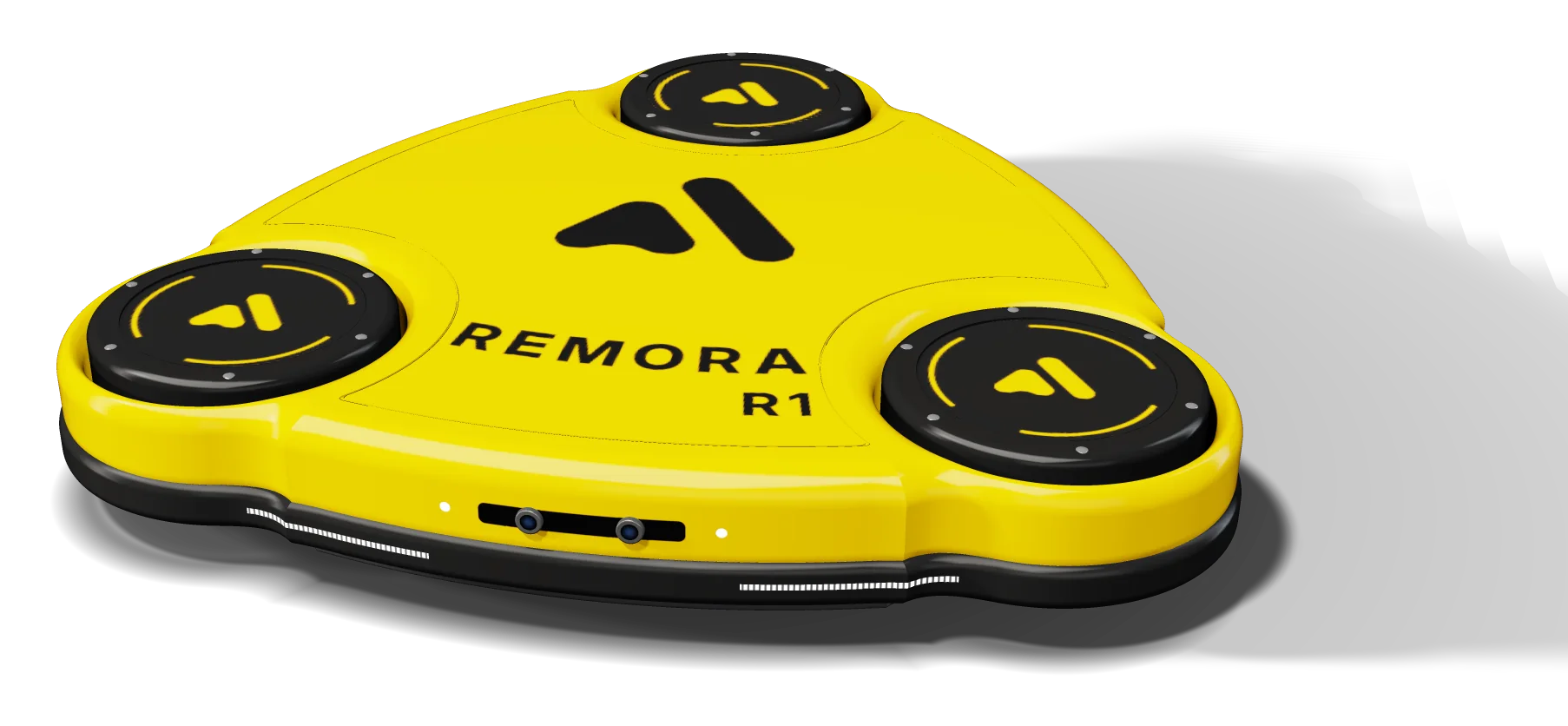
Render of the Azarel Remora R1: a yellow three-lobed robot with REMORA R1 on its top shell, three dark wheel-pod covers, and a camera window between two lights on the front edge.
Product 02 · Azarel Remora R1

Remora R1

Azarel Remora R1 is an autonomous, magnetic hull-crawling robot. It holds onto a ship’s submerged hull, drives itself across it on three steerable wheel pods, brushes off fouling and inspects the steel as it goes. Machine learning tells it what it is looking at, and its behaviour is simulated and trained in Leviathan before it touches a real hull.

  • Prototype in build
  • Images are renders of the final design
Render of the Azarel Remora R1, with REMORA R1 on its yellow three-lobed shell and three wheel pods, working on the red antifouled plating of a ship's hull.
Render  Final designWorking on  Antifouled plating
Film  Remora R1 on the hullConcept renders and Leviathan  1:21
01 · The problem

Why the hull matters

Within days of leaving port, a ship’s hull starts to collect a film of slime, and weed and shell follow. Even a thin layer adds drag, so the engine burns more fuel to hold the same speed, and every extra tonne of fuel is extra carbon.

Fuel and emissions

A fouled hull needs more power for the same speed. Keeping it clean is one of the most direct ways to cut fuel and carbon on ships that are already in service.

Coating life

Heavy fouling has to be scraped off hard, and that wears the antifouling paint. Light, frequent cleaning removes growth before it takes hold and is gentler on the coating.

Biosecurity

Organisms on a hull travel from port to port. A hull that is kept clean carries fewer of them into waters where they don’t belong.

Little and often

Most hulls are cleaned once the fouling is already heavy, a few times a year or less. Drag climbs between cleans and every clean is a hard one. Remora R1 is being built to clean lightly and often instead. It parks and charges on a dock on the hull, so it can clean between port calls without divers or a dry dock.

  • Occasional heavy cleaning
  • Frequent light cleaning
Fouling over time, illustrative A schematic, not measured data. With occasional heavy cleaning, fouling and drag climb steeply between three cleans and drop back each time. With frequent light cleaning, fouling stays low throughout. clean time → fouling and drag ↑ heavy clean little and often
Illustrative, not measured data.
02 · How it works

Map, clean, inspect, report

  1. 01

    Attach and drive

    Magnets in each wheel pod hold Remora R1 to the steel. It drives itself across the hull in any direction and maps it as it goes, so it knows what it has covered.

  2. 02

    Clean

    Three rotary brush heads on spring-loaded carriages follow the shape of the hull and brush the fouling off.

  3. 03

    Inspect

    One camera looks ahead before cleaning and a second checks the result behind. A probe measures the thickness of the steel, so every clean is also an inspection.

  4. 04

    Dock and report

    It returns to its dock on the hull and charges wirelessly. Each run produces a hull report: coverage, before-and-after images, steel thickness and anything that needs a closer look.
Render  Cleaning a laneConcept animation
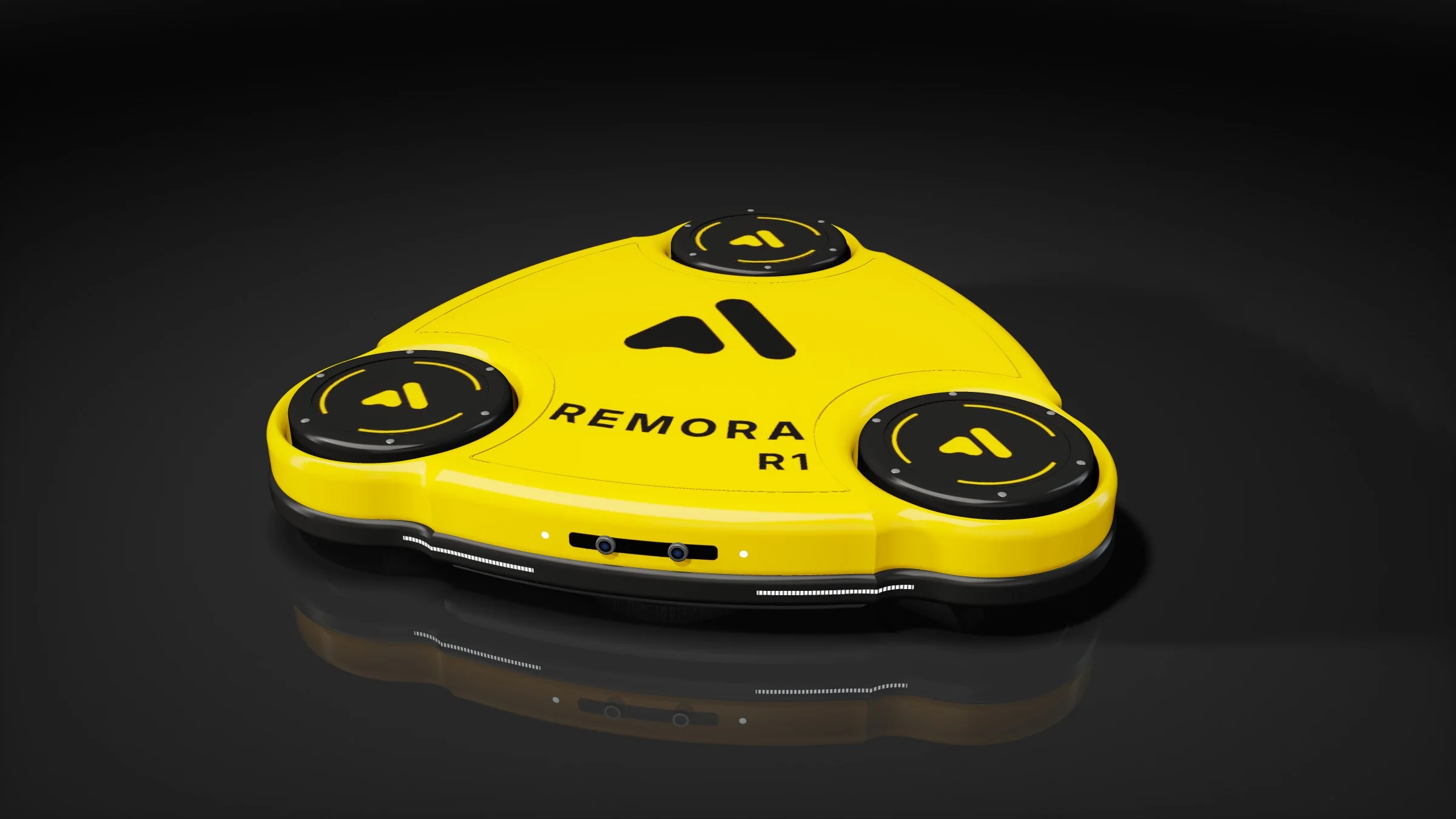
Studio render of the Remora R1 on a black reflective floor: the yellow shell with REMORA R1 lettering, three wheel-pod covers, and the camera window between two lights on the front edge.
Render  Front three-quarter
Render of the Remora R1 from below: three round brush heads and a centre disc on a pale underside, twin-wheel pods at the corners, and the camera window in the yellow shell.
Render  Underside
03 · The robot

A magnetic hull crawler

Wheel pods
Three steerable pods, one at each corner, each with twin wheels. It drives in any direction and turns on the spot.
Magnetic grip
Electro-permanent magnets in every pod hold it to the steel, and keep holding with no power.
Brush heads
Three rotary brush heads underneath, on spring-loaded carriages that follow the curve of the hull.
Two cameras
One looks ahead before cleaning; the other checks the result after.
Light and laser
For working in dark or murky water.
Thickness probe
Measures the hull steel as it moves, for inspection as well as cleaning.
Acoustic link
Underwater positioning and a modem, so it is tracked and talked to without a tether, plus a locator pinger for recovery.
Wireless dock
Parks on a dock on the hull and charges through its underside, with no connectors exposed to seawater.
Safe return
An independent safety pack brings it back to the dock if the main system fails.

Still being proven. Magnetic holding force, wheel grip on hull coatings, behaviour in moving water and the final depth rating are being tested. We will publish figures once they are measured.

04 · Intelligence

Machine learning, trained in simulation

The hard part of hull cleaning is not the brush. It is knowing where you are on a steel wall the length of a city block, in murky water, what is growing in front of you, and how hard to clean it. That is a perception and learning problem, and it is the problem Leviathan was built for.

Render of the Remora R1 underwater, its REMORA R1 lettering visible, working on a ship's fouled green hull with sunlight rippling in the water beside it.
Render  In the water
  • See the hull

    Models that grade the type and coverage of fouling from camera images, patch by patch.

  • Know where it is

    Position on the hull from acoustics, vision and wheel motion, so coverage is complete and nothing is cleaned twice.

  • Clean to suit

    Brushing adjusted to what the camera sees and to the coating underneath.

  • Find defects

    Coating damage, corrosion and thin steel flagged for a person to review.

LeviathanSimulatehull, fouling, water, cameras
LeviathanTrainlabelled images, control policies
TankTestcleaning and inspection trials
SeaDeployon real ships’ hulls

Leviathan already models how fouling grows along a ship’s trading pattern, what it costs in fuel and carbon, and how robots would clean and inspect the hull, and its camera and sonar models export labelled images with per-pixel ground truth. See the Hull workspace

05 · Where we are

From render to the water

  1. DesignFinal design completeDone
  2. SimulationBehaviour and training in LeviathanIn progress
  3. PrototypeFirst robot being builtBuilding now
  4. Tank testsCleaning and inspection in a test tankNext
  5. Sea trialsOn a working ship’s hullPlanned

Run a fleet, a port or a shipyard? We are looking for partners for early trials.

Talk to us

One brain for every robot.

Get in touch →